Tel:
Email:
Although both attachments are designed for tree harvesting, they serve different purposes. A feller buncher head focuses on fast cutting and bunching trees, while a harvester head combines cutting with additional processing functions such as delimbing and bucking.
This guide explains the differences between these two forestry attachments, including their structures, applications, hydraulic requirements, and selection considerations.
A feller buncher head for sale is a forestry attachment designed to cut trees and gather multiple stems into organized groups. It is commonly installed on tracked or wheeled forestry machines and is widely used for commercial logging, land clearing, and large-scale forest management projects.
The main purpose of a feller buncher head is high-speed tree removal. Unlike a processing harvester head, it does not usually prepare finished logs. Instead, it focuses on cutting trees efficiently and placing them in bunches for later transportation or processing.
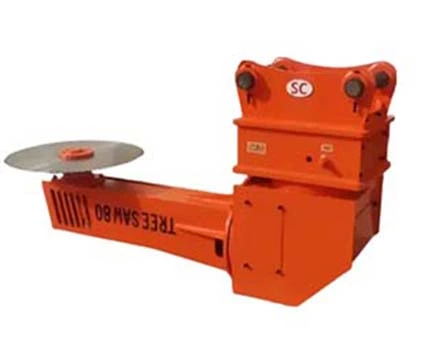
A typical feller buncher head includes hydraulic gripping arms, cutting mechanisms, and accumulation systems. Depending on tree conditions and application requirements, different cutting technologies can be selected, including disc saws and shear cutting systems.
For companies looking for a tree harvester for sale, it is important to understand whether the operation requires fast cutting or complete timber processing. A feller buncher head is usually the preferred solution when productivity and harvesting speed are the main priorities.
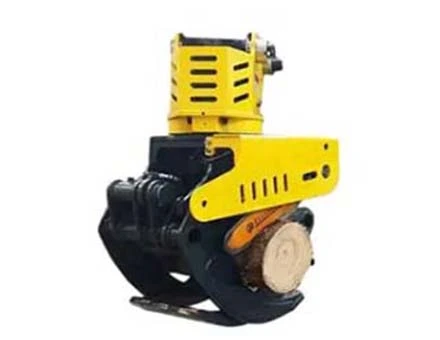
A harvester head is a multifunctional forestry attachment that can cut, process, and prepare trees directly at the harvesting site. Compared with a traditional cutting attachment, a forestry harvester head provides more complete processing capabilities.
After cutting a tree, the harvester head can remove branches, measure the trunk diameter, and cut the stem into specific lengths. This integrated process reduces the need for additional equipment and improves overall workflow efficiency.
Modern harvester heads typically include feeding rollers, cutting saws, delimbing knives, and measurement systems. These components allow operators to produce logs with consistent dimensions and improve timber utilization.
For buyers searching for a harvester head for sale, the biggest advantage is versatility. A single attachment can complete multiple forestry operations, making it suitable for applications where accuracy and processing efficiency are important.
The key difference between a feller buncher head and a harvester head is their ability to process trees after cutting. While both attachments can perform tree felling, their working methods are different.
| Function | Feller Buncher Head | Harvester Head |
|---|---|---|
| Cutting | Excellent | Excellent |
| Bunching | Excellent | Limited |
| Delimbing | Limited | Available |
| Bucking | Limited | Available |
| Main Advantage | Fast tree removal | Complete processing |
A feller buncher head for sale is designed for high-volume cutting operations. It allows operators to remove large numbers of trees quickly, making it suitable for large forestry projects.
A harvester head focuses on producing processed timber directly at the work site. Its additional functions help reduce manual handling and improve log quality control.
The right choice depends on whether the priority is harvesting speed or complete tree processing.
The performance of a forestry attachment depends heavily on compatibility with the carrier machine. Before purchasing a feller buncher head for sale or an excavator harvester head for sale, buyers should confirm that the attachment matches the machine specifications.
Important factors include:
Carrier capacity: The weight and stability of the machine must support the attachment during operation.
Hydraulic performance: Adequate hydraulic flow and pressure are required for cutting, gripping, and feeding systems.
Mounting compatibility: The connection structure should match the carrier for safe installation.
Working conditions: Tree size, terrain, and operating environment should be considered during selection.
A properly matched attachment improves efficiency and reduces unnecessary wear. For excavator-based forestry applications, an excavator harvester head for sale can provide flexibility, but the excavator must have sufficient hydraulic power and lifting capability.
Different forestry operations require different solutions. A feller buncher head is commonly used for large-scale logging, forest clearing, and projects where fast tree removal is required.
Because of its strong cutting capability, it performs well in environments where operators need to process a large number of trees within a short time. It is especially suitable for commercial harvesting operations focused on productivity.
A harvester head is better suited for selective harvesting and timber production applications. Since it can cut, delimb, and buck trees, it provides better control over final log dimensions and reduces additional processing requirements.
When selecting between a feller buncher head and a harvester head, companies should consider their complete workflow, production targets, and long-term operating costs.
The best forestry attachment depends on your working requirements, carrier machine, and harvesting goals. Before making a purchase decision, consider the following points:
Choose a feller buncher head when:
You need fast tree cutting, high production efficiency, and reliable performance in large-scale harvesting operations.
Choose a harvester head when:
You need cutting, delimbing, and bucking functions in one attachment to improve timber processing efficiency.
Check machine compatibility:
Confirm hydraulic specifications, mounting systems, and carrier capacity before installation.
Evaluate supplier support:
Select a manufacturer that provides technical assistance, customization options, and reliable after-sales service.
For companies searching for a feller buncher head for sale, choosing the right supplier is just as important as selecting the attachment. BYCTI provides forestry attachment solutions designed for demanding environments, helping customers improve productivity and equipment reliability.
Some models can be installed on excavators if hydraulic and mounting requirements are suitable.
A harvester head combines cutting, delimbing, and bucking functions in one attachment.
The attachment should match the carrier machine capacity and the average tree size in the working area.
They are most effective for large-scale harvesting and tree removal operations.
Buyers should provide carrier details, tree size range, working conditions, and required functions.
 English
 Deutsch
 Español
 русский
 português
 العربية