Tel:
Email:
Selecting the right excavator harvester head is a key decision for forestry contractors who want to improve productivity, reduce operating costs, and maximize excavator performance. As excavator-based harvesting becomes more popular, more operators are looking for attachments that can handle cutting, feeding, delimbing, and timber processing in different working environments.
However, choosing a suitable harvesting attachment is not simply about selecting the largest model. The excavator size, hydraulic system, cutting capacity, mounting compatibility, and working conditions all affect the final performance. Whether you need a mini excavator harvester head for small-scale forestry operations or a heavy-duty solution for commercial timber harvesting, proper equipment matching is essential.
SC Equipment provides forestry attachment solutions designed for different excavator applications, helping customers select the right equipment based on machine specifications and project requirements.
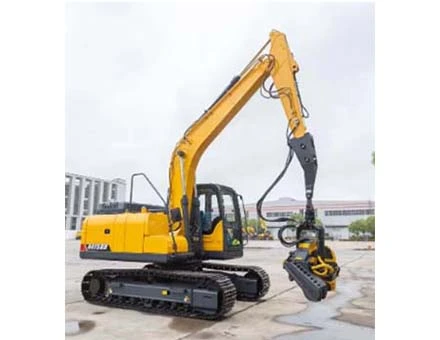
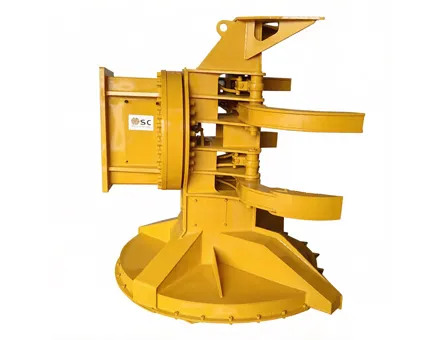
An excavator harvester head is a multifunctional forestry attachment that converts an excavator into a flexible timber processing machine. Unlike simple cutting attachments, it integrates several operations into one system, including tree cutting, feeding, delimbing, and processing.
During operation, the excavator positions the harvester head around the tree trunk. The cutting unit separates the tree, while feed rollers move the timber through the attachment. At the same time, delimbing knives remove branches and prepare the timber for transportation or further processing.
The main advantage of an excavator-mounted solution is flexibility. Compared with dedicated harvesting machines, excavators equipped with a forestry harvester head can access difficult terrain, smaller forest areas, and projects where equipment mobility is important.
Different forestry applications require different attachment designs. A lightweight, small harvester head is suitable for selective cutting and smaller trees, while larger models provide stronger cutting performance for commercial harvesting operations.
The weight relationship between the excavator and attachment directly affects safety, stability, and working efficiency. An attachment that exceeds the excavator’s capacity may reduce lifting performance and increase stress on the hydraulic system, while an undersized model may not fully utilize the machine’s potential.
When selecting an excavator harvester head, buyers should consider several important factors:
Excavator operating weight: Larger excavators generally support heavier attachments with stronger cutting and feeding capabilities.
Attachment balance: The weight distribution between the boom, arm, and harvester head affects machine stability and operator control.
Working environment: Steep slopes, narrow areas, and uneven terrain often require lighter equipment for better maneuverability.
Timber size: Larger trees require stronger cutting systems and more durable processing components.
| Excavator Size | Suitable Harvester Head Type | Typical Applications |
|---|---|---|
| Mini excavator | Mini excavator harvester head | Small forestry projects and maintenance cutting |
| Medium excavator | Standard harvester head | Commercial forestry and mixed timber operations |
| Large excavator | Heavy-duty forestry harvester head | Large diameter timber and high-volume harvesting |
Matching the attachment weight with excavator capacity helps ensure better fuel efficiency, longer component life, and more stable operation. Many contractors evaluating head harvester solutions focus on carrier compatibility before comparing specific attachment features.
Hydraulic performance is one of the most important factors when choosing an excavator harvester head. Since the attachment relies on hydraulic power to operate cutting motors, feed rollers, and other components, the excavator must provide sufficient flow and pressure.
A properly matched hydraulic system ensures stable cutting force and consistent feeding speed. If hydraulic flow is insufficient, the attachment may experience slower processing cycles and reduced productivity. On the other hand, incorrect pressure settings can increase wear on hydraulic components.
Before purchasing, operators should confirm:
Hydraulic flow requirements
Operating pressure range
Auxiliary circuit compatibility
Return-line configuration
Cooling capacity of the hydraulic system
Compatibility is especially important for operators using specific excavator brands. For example, buyers searching for Komatsu harvester heads should verify hydraulic specifications and mounting compatibility instead of relying only on equipment brand matching.
Cutting performance determines how effectively a harvesting attachment can handle different forestry tasks. The maximum cutting diameter, roller structure, and delimbing capability all influence production efficiency.
A high-quality woody harvester head should balance cutting power with processing speed. Larger cutting capacity allows the attachment to handle bigger trees, while efficient feed rollers improve timber movement through the machine.
Feed roller design is particularly important because it controls processing stability. Strong rollers help maintain consistent feeding even when working with irregular tree shapes or rough bark surfaces.
Delimbing performance also affects overall productivity. Efficient knives reduce the need for additional manual processing and help produce cleaner timber outputs.
For contractors working in different environments, selecting the correct combination of cutting capacity and attachment weight is essential. A compact model may provide better flexibility, while larger systems are designed for higher-volume forestry production.
A harvesting attachment must integrate smoothly with the excavator to achieve reliable performance. Mounting structure, rotator capability, and control system compatibility all influence daily operation efficiency.
Key compatibility considerations include:
Mounting connection: The attachment should match the excavator arm and coupler system for secure installation.
Rotator performance: A suitable rotator improves positioning flexibility and allows operators to process trees from different angles.
Hydraulic connection: Proper hose routing helps maintain stable hydraulic operation.
Control integration: User-friendly controls improve operator efficiency and reduce unnecessary movements.
Modern harvesting systems often include electronic controls and measurement functions that improve processing accuracy. When selecting an excavator harvester head, buyers should evaluate both mechanical performance and system integration.
Before ordering a harvesting attachment, buyers should review several factors to ensure the equipment matches their long-term operational needs.
Check excavator compatibility: Confirm machine weight, hydraulic specifications, and mounting requirements.
Define the application: Consider tree diameter, terrain conditions, and expected production volume.
Evaluate durability and maintenance: Review component quality, service accessibility, and spare parts availability.
Choose an experienced supplier: Technical support and application knowledge are important for successful equipment operation.
SC Equipment offers forestry attachment solutions for different excavator models and working environments. By combining suitable carrier matching, hydraulic compatibility, and cutting performance, customers can select equipment that delivers reliable results in real forestry operations.
The suitable size depends on attachment weight, hydraulic capacity, and working conditions. Compact models fit smaller excavators, while larger heads require higher-capacity machines.
Yes. Different models are designed for different cutting diameters and forestry applications.
Hydraulic performance, cutting capacity, feed roller design, and operator experience all influence productivity.
It can be suitable for selective cutting, small timber operations, and projects requiring better mobility.
Buyers should confirm excavator compatibility, hydraulic requirements, mounting specifications, and application needs.
Choosing the right excavator harvester head requires careful consideration of carrier size, hydraulic performance, and processing capability. By selecting an attachment that matches both the excavator and forestry requirements, contractors can achieve better efficiency, lower maintenance costs, and more reliable harvesting performance.
 English
 Deutsch
 Español
 русский
 português
 العربية