Tel:
Email:
Although both systems are designed for tree felling and forestry operations, they have different working principles, movement characteristics and application advantages. A dangle head focuses on flexibility and terrain adaptability, while a fixed head provides stronger directional control and stability.
Whether you are searching for a forestry harvester head, an excavator harvester head, or a reliable feller buncher head for sale, understanding how these attachments perform in real working conditions can help you choose the right solution for your forestry projects.
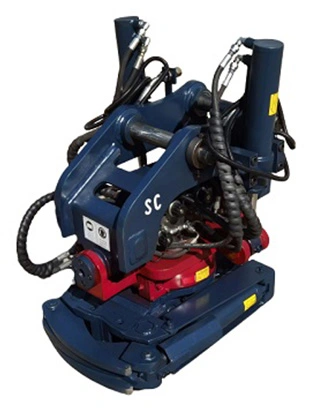
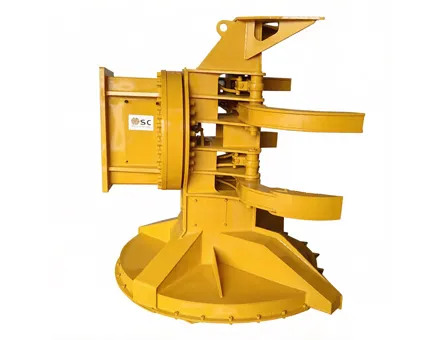
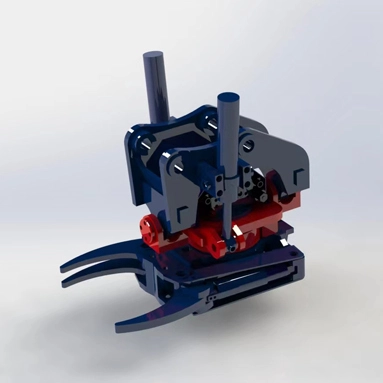
A dangle head feller buncher is a forestry attachment that is suspended from the carrier machine through a flexible connection system. Unlike fixed attachments that maintain a rigid angle, a dangle head can move naturally according to gravity and terrain conditions.
This design allows the attachment to adjust its position while the operator controls the excavator or forestry carrier. The flexible movement helps the machine approach trees from different directions, especially in forests with uneven ground, slopes or limited working space.
The basic structure of a dangle head usually includes:
A suspended cutting unit connected to the boom
Hydraulic-powered cutting components
Tree holding and positioning mechanisms
The main advantage of this design is adaptability. A dangle head can follow ground changes more easily and reduce the need for precise machine positioning. This makes it suitable for selective harvesting, difficult terrain and projects where access flexibility is more important than maximum production speed.
Compared with traditional fixed systems, a dangle head provides operators with more freedom when working in complex forestry environments.
A dangle harvester head uses the hydraulic system of the carrier machine to perform cutting and tree handling operations. The operator positions the attachment around the tree, activates the cutting system, and uses the holding mechanism to control the tree during felling.
Because the head is suspended, it can naturally adjust its angle during operation. This movement helps improve contact with trees when working on uneven surfaces or in areas where machine movement is restricted.
The working process usually involves several stages. First, the attachment approaches and grips the tree. The cutting mechanism then separates the trunk, while the holding system helps maintain control. After cutting, the machine can move or place the tree according to the operation requirements.
A dangle design is often selected for excavator-based forestry solutions because it provides greater flexibility. An excavator harvester head with a dangle structure can be especially useful for contractors who need a versatile attachment that can operate across different job sites.
However, the flexible movement also means operators need good control skills. Compared with fixed attachments, dangle heads may require more experience to achieve precise positioning.
A fixed felling head uses a rigid connection between the attachment and the carrier machine. Instead of moving freely, the cutting head maintains a stable position during operation.
This structure provides stronger directional control and allows operators to apply cutting force more directly. For large-scale forestry operations where consistent production and accurate tree placement are priorities, fixed heads can offer significant advantages.
Fixed heads are commonly used in environments where:
Large trees require stronger cutting stability
Production efficiency is a priority
Operators need predictable attachment movement
Because the attachment remains more stable, fixed systems often provide better control when handling heavier timber. A professional head harvester equipped with a fixed cutting system can deliver reliable performance in commercial harvesting applications.
The choice between fixed and dangle designs depends mainly on project conditions. Fixed heads are not necessarily better in every situation; they are simply optimized for different operational requirements.
The biggest difference between dangle and fixed attachments is how the cutting head responds to boom movement. This difference affects operator control, working speed and suitability for different forestry environments.
| Feature | Dangle Head Feller Buncher | Fixed Felling Head |
|---|---|---|
| Connection Type | Flexible suspended connection | Rigid mounting connection |
| Movement | Follows terrain naturally | Maintains fixed position |
| Control Style | More flexible positioning | More precise directional control |
| Best Advantage | Terrain adaptability | Stability and accuracy |
| Typical Applications | Uneven terrain, selective harvesting | High-volume forestry operations |
A dangle head provides better flexibility because the attachment can adjust naturally while the machine moves. This is useful in forests where terrain conditions make positioning difficult.
A fixed head provides more direct control because the cutting unit follows the carrier movement more precisely. This can improve efficiency in open areas where operators need consistent cutting direction.
When comparing attachments, contractors should consider not only cutting performance but also how the machine will be used every day.
The working environment plays an important role in selecting the right forestry attachment. Different forests create different challenges, and the best attachment depends on terrain conditions, tree characteristics and production goals.
Dangle head systems are often preferred for challenging environments. Their flexible movement allows operators to work around slopes, obstacles and irregular ground conditions. They are suitable for selective harvesting and areas where machine accessibility is limited.
Fixed heads are usually preferred for more structured forestry operations. When working in flatter areas with larger volumes of similar-sized trees, the additional stability can improve productivity and simplify operation.
Tree size is another important consideration. Larger trees require stronger cutting systems, more durable structures and sufficient hydraulic power. Contractors looking for a feller buncher head for sale should evaluate cutting diameter, machine compatibility and expected workload before making a decision.
The correct attachment should match both the forestry environment and the carrier machine. Choosing based only on price or attachment size may lead to reduced efficiency or unnecessary operating costs.
Choosing between a dangle head and a fixed head depends on your specific forestry requirements. Both designs provide effective tree-felling capabilities, but they are optimized for different applications.
Before selecting an attachment, consider the following factors:
Working conditions: Choose a dangle head when terrain flexibility and access are important. Consider a fixed head when stable operation and directional accuracy are priorities.
Carrier compatibility: Check excavator size, hydraulic capacity and mounting requirements to ensure reliable performance.
Production goals: High-volume forestry operations may benefit from fixed systems, while flexible projects may require dangle solutions.
SC Equipment provides forestry attachment solutions designed for different machines and applications. By evaluating terrain, tree size and operational requirements, contractors can select the right attachment configuration for efficient and reliable harvesting performance.
A dangle head provides better flexibility and terrain adaptability, making it suitable for complex forestry environments.
Yes. Fixed heads often provide strong stability and cutting control for larger timber operations.
Yes. Many dangle-style attachments can be configured as an excavator harvester head when hydraulic and mounting requirements are compatible.
The choice depends on terrain, tree size, production requirements and carrier machine specifications.
Check attachment weight, hydraulic compatibility, cutting capacity and supplier technical support.
Choosing between a dangle head feller buncher and a fixed head forestry attachment requires a clear understanding of movement, control and application requirements. By matching the attachment design with working conditions and machine capabilities, forestry contractors can achieve better productivity and long-term value from their equipment.
 English
 Deutsch
 Español
 русский
 português
 العربية