Tel:
Email:
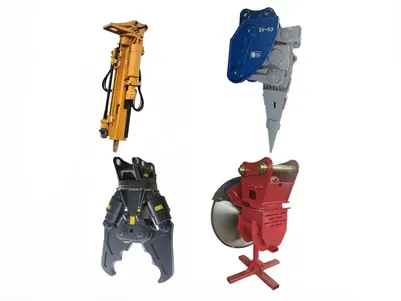
A concrete pulverizer is generally the better choice for secondary demolition tasks such as crushing reinforced concrete, separating rebar, and processing demolished structures after initial breaking. A hydraulic breaker is more effective for primary demolition where high-impact force is required to break large concrete structures, foundations, and heavily reinforced materials.
For contractors selecting between a pulverizer excavator attachment and a hydraulic breaker, the right choice depends on the demolition stage, material condition, productivity requirements, and recycling goals.
The main difference is how they break concrete.
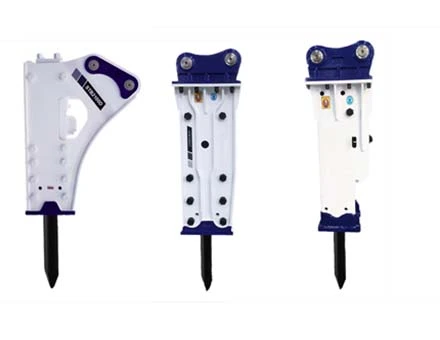
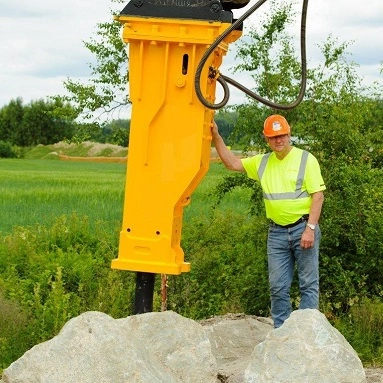
A hydraulic breaker uses repeated impact energy to fracture concrete and rock. It delivers powerful blows through a chisel tool, making it ideal for initial structure demolition.
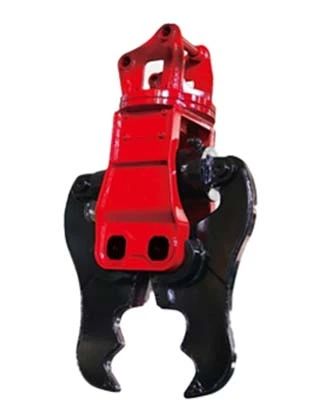
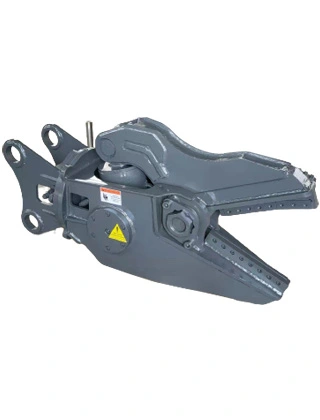
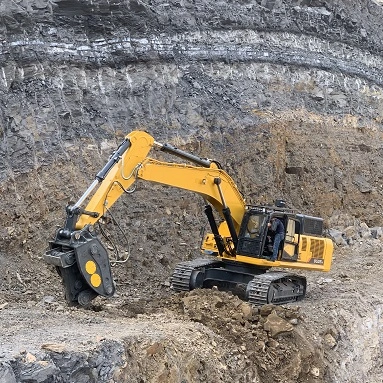
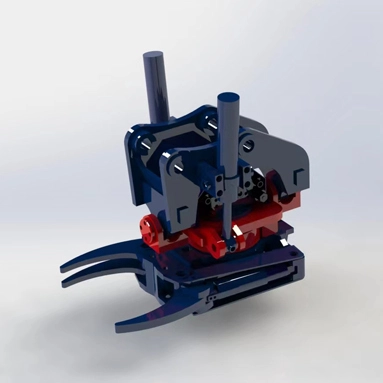
A concrete pulverizer for excavator uses crushing force through hydraulic jaws to compress and break concrete into smaller pieces while separating steel reinforcement. It is designed for secondary demolition and material processing.
| Feature | Concrete Pulverizer | Hydraulic Breaker |
|---|---|---|
| Working method | Crushing and shearing | Impact breaking |
| Main application | Secondary demolition | Primary demolition |
| Material processing | Breaks and separates concrete/rebar | Fractures concrete and rock |
| Noise and vibration | Lower | Higher |
| Recycling efficiency | Excellent | Limited |
| Typical materials | Reinforced concrete | Concrete, rock, foundations |
A concrete pulverizer is better when the goal is controlled demolition, concrete recycling, and rebar separation. A hydraulic breaker is better when maximum breaking force is needed to initially reduce large concrete structures.
Professional demolition contractors often use both attachments during the same project:
Hydraulic breaker for primary demolition
Breaks large concrete sections
Creates manageable debris
Removes structural elements
Concrete pulverizer for secondary demolition
Crushes remaining concrete
Separates reinforcement steel
Prepares material for recycling
Using the correct attachment at each stage improves productivity and reduces unnecessary wear on excavators.
A hydraulic breaker is one of the most common excavator attachments for heavy demolition and excavation work.
Typical applications include:
Breaking concrete foundations
Demolishing roads and pavements
Removing reinforced concrete structures
Breaking large rocks
Quarry and mining applications
The main advantage of a hydraulic breaker is its high impact energy. It can penetrate hard materials quickly, making it suitable for situations where crushing alone would not be effective.
However, hydraulic breakers generate significant vibration and create irregular concrete fragments, which may require additional processing before recycling.
An excavator concrete pulverizer is designed specifically for crushing concrete after structures have already been broken apart.
Common applications include:
Building demolition
Bridge demolition
Concrete recycling
Reinforced concrete processing
Material separation projects
A pulverizer excavator attachment provides several operational advantages:
Efficient crushing of concrete chunks
Separation of steel reinforcement
Reduced secondary processing
Lower noise compared with impact demolition
Better control in urban demolition environments
For contractors focused on recycling and material recovery, a concrete pulverizer often provides higher overall project value.
A concrete pulverizer is the preferred attachment when:
After a hydraulic breaker or other demolition method creates concrete debris, the pulverizer can process the material into smaller pieces.
The crushing jaws can break concrete while exposing and separating steel reinforcement bars.
Urban demolition projects often require quieter equipment. A concrete pulverizer creates less vibration than impact-based tools.
Pulverized concrete is easier to transport, sort, and reuse as recycled aggregate.
A hydraulic breaker is more suitable for primary demolition situations requiring aggressive material breakdown.
Choose a hydraulic breaker when:
Concrete structures are large and intact
Foundations need to be removed
Rock excavation is required
Fast penetration is the priority
Material separation is not the first concern
The breaker’s impact mechanism allows operators to quickly create fractures and access areas that require further demolition.
For reinforced concrete, the most efficient approach is usually a combination of both attachments.
A hydraulic breaker can quickly fracture thick concrete structures, while a concrete pulverizer for excavator can then crush the remaining sections and separate reinforcement.
The pulverizer provides better control because it applies compression force instead of repeated impacts. This reduces flying debris and improves material recovery.
A concrete pulverizer cannot fully replace a hydraulic breaker because the two attachments serve different demolition stages.
A pulverizer is designed for crushing and processing, while a breaker is designed for initial fracture and penetration.
Replacing a breaker with a pulverizer may reduce efficiency when dealing with:
Large concrete foundations
Thick structural slabs
Rock materials
Heavy demolition work
For most professional demolition operations, both attachments complement each other.
Before purchasing a concrete pulverizer for excavator or hydraulic breaker, consider:
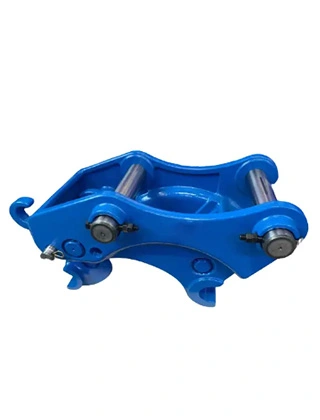
Attachment weight, hydraulic flow, and operating pressure must match the excavator.
Primary demolition → Hydraulic breaker
Secondary demolition → Concrete pulverizer
Rock and thick concrete → Hydraulic breaker
Reinforced concrete recycling → Pulverizer
Urban projects may benefit from pulverizers due to lower noise and vibration.
A pulverizer excavator improves demolition efficiency by combining crushing and material separation in one operation.
Key benefits include:
Faster concrete processing
Reduced transportation costs
Improved recycling efficiency
Lower environmental impact
Better control during demolition
For contractors handling frequent demolition projects, investing in a quality excavator concrete pulverizer can improve both productivity and profitability.
Concrete pulverizers and hydraulic breakers are not competing attachments; they are designed for different demolition stages.
A hydraulic breaker is the better choice for primary demolition because it delivers powerful impact energy to break large concrete structures. A concrete pulverizer for excavator is the better solution for secondary demolition because it crushes concrete, separates rebar, and prepares materials for recycling.
For demolition contractors choosing between a pulverizer excavator attachment and a hydraulic breaker, the best solution is to match the tool with the project phase, material type, and recycling objectives. Using the right attachment combination delivers higher productivity, lower operating costs, and better demolition results.
A hydraulic breaker uses impact force to break concrete, while a concrete pulverizer uses crushing force to process and separate concrete materials.
Yes. A concrete pulverizer can crush reinforced concrete and help separate steel reinforcement.
Yes. Hydraulic breakers are designed for initial breaking of large concrete structures and hard materials.
It is used for secondary demolition, concrete crushing, rebar separation, and recycling preparation.
Yes. Many demolition contractors switch between hydraulic breakers and pulverizers depending on the demolition stage.
A concrete pulverizer is usually better because it produces processed concrete pieces and separates reinforcement steel efficiently.
 English
 Deutsch
 Español
 русский
 português
 العربية