English
 Deutsch
 Español
 русский
 português
 العربية
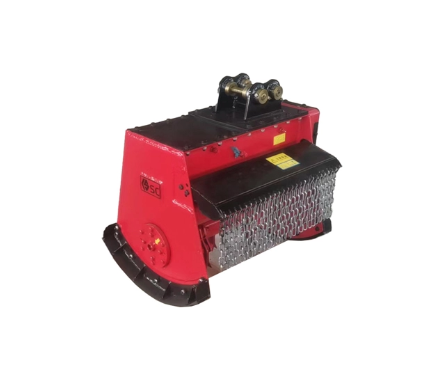
Main Components of a Flail Mower
To understand the durability of this equipment, it is helpful to look at its robust, straightforward construction.| Component | Function |
|---|---|
| Rotor (Drum) | The heavy horizontal steel cylinder that holds the flails and drives the cutting action. |
| Flails (Blades/Hammers) | The free-swinging metal tools that cut and shred the vegetation. Available in Y-shape, T-shape, or hammer styles. |
| Housing (Deck) | The heavy-duty steel casing that contains the spinning rotor and safely traps flying debris. |
| Hydraulic Motor / PTO | The power source that provides the high torque needed to spin the rotor effectively. |
| Rear Roller | Tracks along the ground to control the cutting height, prevent scalping, and leave a striped finish. |
| Side Skids | Protect the sides of the housing from grinding against rough terrain or obstacles. |
Types of Flail Mowers
Not all flail mowers are created equal. The type you need depends entirely on the carrier machine you own and the environment you work in.Tractor PTO Flail Mower
This is the most traditional setup. Attached to the 3-point hitch of a tractor and driven by the PTO shaft, these are ideal for wide, open spaces like farms and large estates.Pros: Highly efficient for large, flat areas; straightforward maintenance.
Cons: Limited maneuverability; cannot reach up high or over fences.
Hydraulic Flail Mower
Powered entirely by auxiliary hydraulics rather than a mechanical shaft, these mowers are typically mounted on skid steers, compact track loaders, or excavators. They are highly maneuverable and perfect for contractors who navigate tight spaces, residential lots, or commercial property developments.Boom Arm Flail Mower
Often seen on municipal tractors, a boom arm flail mower is mounted on a long, articulated arm. This allows the operator to reach over guardrails, down into deep drainage ditches, or vertically to trim tall hedgerows. It is the ultimate tool for roadside maintenance.Excavator Flail Mower Attachment
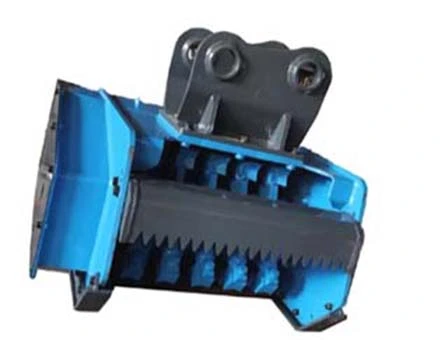
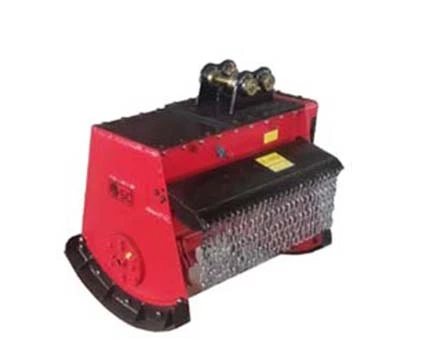
This is the fastest-growing category for B2B contractors and forestry professionals. Mounted on the boom of an excavator, an excavator flail mower offers unparalleled reach and flexibility compared to tractor-mounted units. An excavator can swing 360 degrees, reach up steep embankments, reach down into ravines, and mow over retaining walls without driving the machine onto unstable ground.Excavator Flail Mower Attachment Best Suited For: Land clearing contractors, municipalities, and forestry service companies.
Flail Mower vs Rotary Mower
Buyers often debate whether to invest in a flail mower or a traditional rotary mower (brush hog). While rotary mowers excel at cutting large areas of short grass quickly, flail mowers offer significant advantages in heavy-duty applications.| Feature | Flail Mower | Rotary Mower |
|---|---|---|
| Safety (Projectile Risk) | High (Debris goes down) | Medium (Can throw rocks outward) |
| Debris Control | Excellent (Fully enclosed) | Moderate (Open sides) |
| Rough Terrain Handling | Excellent (Rollers follow contours) | Limited (Prone to scalping) |
| Mulching Quality | Excellent (Fine, shredded mulch) | Fair (Leaves large clippings) |
| Maintenance Needs | Moderate (Many flails to check) | Low (Fewer blades to sharpen) |
| Heavy Brush Control | Better (Pulverizes material) | Limited (Tends to leave stalks) |
Advantages of Using a Flail Mower
Why do landscaping professionals and municipal governments heavily favor flail mowers? Here are the core benefits:Improved Safety
Because the cutting action creates a downward draft and the deck is enclosed by heavy steel and chain guards, the risk of projectiles (like rocks, glass, or metal debris) flying out at high speeds is dramatically reduced. This makes it the only responsible choice for working near traffic, pedestrians, or glass buildings.Superior Mulching Quality
Flail mowers don't just cut; they pulverize. The vegetation stays in the housing and is chopped multiple times until it is small enough to pass through. This fine mulch decomposes rapidly, eliminating the need to collect and haul away the debris.Better Performance on Uneven Terrain
Equipped with a rear roller, a flail mower naturally tracks the contours of the ground. This prevents "scalping" (cutting down to the bare dirt) on hills or uneven surfaces, leaving a clean, uniform finish.Handles Thick Vegetation
With the right hammer flails installed, these machines effortlessly tear through dense blackberry bushes, heavy thickets, overgrown weeds, and light brush that would stall a standard rotary mower.Long Service Life and Durability
Because the flails swing freely, they absorb the shock of hitting hidden rocks or stumps. In a rotary mower, hitting a rock transfers the impact directly into the gearbox, often causing catastrophic failure. Flail mowers isolate this damage, extending the machine's lifespan.Limitations of Flail Mowers
To make an informed purchasing decision, it is essential to understand where a flail mower might not be the best fit.Higher Initial Cost: Due to the complex rotor, heavy-duty bearings, and sheer number of cutting tools, flail mowers are generally more expensive to purchase than simple rotary cutters.
More Moving Parts: With dozens of individual flails, bolts, and a high-speed balanced rotor, maintenance takes a bit more time. If one flail breaks, it must be replaced quickly to maintain the rotor's balance.
Slower in Open Grass Fields: If you simply need to trim a 50-acre flat pasture of short grass, a flail mower will be slower and consume more fuel than a wide rotary mower.
Not Ideal for Large Trees: While they handle brush well, flail mowers cannot process mature trees or thick limbs. Pushing a flail mower into thick timber will damage the machine.
| Challenge | Recommended Solution |
|---|---|
| Dense trees & thick brush | Forestry Mulcher |
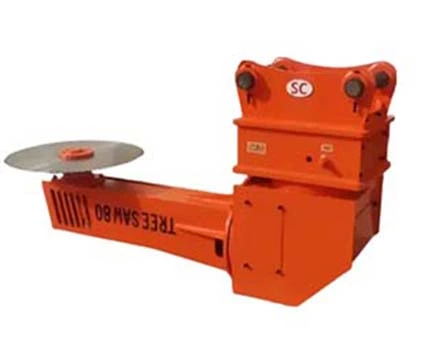
| Processing large timber/logs | Tree Saw / Tree Shear |
| Heavy commercial land clearing | Forestry Excavator Attachments |
Flail Mower vs Forestry Mulcher — Which One Should You Choose?
This is a critical distinction that many contractors struggle with. While both machines manage vegetation, they are engineered for entirely different applications.| Feature | Flail Mower | Forestry Mulcher |
|---|---|---|
| Grass & Weeds | Excellent | Good |
| Light Brush | Good | Excellent |
| Saplings & Thick Brush | Limited | Excellent |
| Land Clearing & Stumps | Limited | Excellent |
| Whole Tree Processing | No | Yes |
If your typical project involves simply maintaining existing grass, verges, or light overgrowth, the flail mower is your best bet. However, if your projects involve dense vegetation, heavy brush removal, utility corridor maintenance, commercial site preparation, or turning whole trees into sawdust, a forestry mower attachment is a far superior investment. Forestry mulchers use fixed carbide or steel teeth on a massively reinforced drum, designed specifically to eat through solid wood.
How to Choose the Right Flail Mower
Selecting the right attachment requires matching the tool to your specific carrier and job site. Keep these factors in mind:Vegetation Type
Identify what you will be cutting 80% of the time. Are you maintaining manicured orchard grass, or are you tearing down thick briars and saplings?Machine Carrier
You must match the mower to your machine's weight class. An 8-ton excavator requires a very different attachment than a 20-ton excavator. An oversized mower will tip the carrier, while an undersized mower will waste your machine's potential.Working Width
Wider isn't always better. A wide mower cuts more area but requires significantly more hydraulic power to maintain rotor speed. Choose a width that your machine can power effortlessly.Hydraulic Flow Requirements
For excavator and skid steer attachments, GPM (Gallons Per Minute) and operating pressure are the most vital metrics. The mower's hydraulic motor must match your carrier's auxiliary flow perfectly to ensure peak performance.Flail Type
Y-Flails: Best for grass, weeds, and achieving a neat finish.
Hammer Flails (T-Flails): Heavier, forged steel blocks designed to smash brush, branches, and heavy thickets.
| Application | Recommended Attachment |
|---|---|
| Lawn/Pasture Grass | Standard Flail Mower (Y-Blades) |
| Overgrown Brush/Briars | Heavy-Duty Flail Mower (Hammer Flails) |
| Saplings & Undergrowth | Forestry Mulcher |
| Thick Trees & Branches | Tree Saw / Tree Shear |
Frequently Asked Questions About Flail Mowers
Is a flail mower better than a rotary mower?
It depends on the application. A flail mower is significantly better for safety, mulching heavy brush, and working on uneven terrain. However, a rotary mower is typically faster and more cost-effective for cutting large, flat fields of short grass.Can a flail mower cut brush?
Yes. When equipped with heavy-duty hammer flails, a flail mower can easily cut and mulch thick brush, blackberry thickets, and small saplings up to 2 inches in diameter.Can an excavator use a flail mower?
Absolutely. Excavator flail mowers are incredibly popular because the excavator's boom allows the operator to reach over fences, down into steep ditches, and high up onto embankments that traditional tractors cannot access safely.What size branches can a flail mower cut?
Most heavy-duty flail mowers can handle branches and saplings between 1 to 2.5 inches in diameter. Attempting to cut thicker branches frequently will cause excessive wear or damage to the rotor. For larger material, a forestry mulcher is required.What is the difference between a flail mower and a forestry mulcher?
A flail mower uses free-swinging blades to cut grass and light brush. A forestry mulcher uses fixed, heavy-duty teeth (often carbide-tipped) mounted on a highly reinforced drum to grind heavy brush, whole trees, and stumps into mulch.Why Contractors Choose SC Equipment for Vegetation Management Attachments
As your business grows from light landscaping to heavy-duty land clearing, roadside maintenance, and site preparation, standard mowers often fall short. That is where professional-grade heavy attachments come in.About SC Equipment
Established in 2008, SC Equipment is a globally recognized, professional manufacturer specializing in premium excavator attachments. For over 15 years, we have been at the forefront of engineering solutions for the construction, demolition, recycling, forestry, and foundation-laying industries. Operating out of state-of-the-art manufacturing facilities, we boast strong Research & Development capabilities and stringent quality control. All of our products are CE-certified, ensuring they meet the highest international safety and performance standards. Today, SC Equipment provides reliable, high-ROI attachment solutions for contractors, heavy equipment dealers, machinery rental companies, and fleet owners worldwide.Our Product Categories
Forestry Attachments
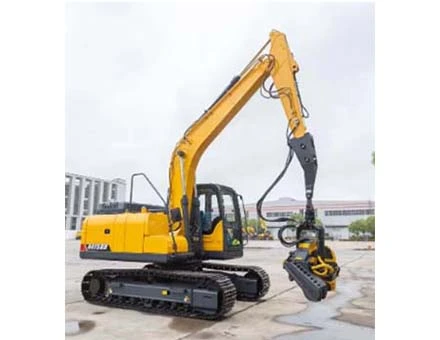
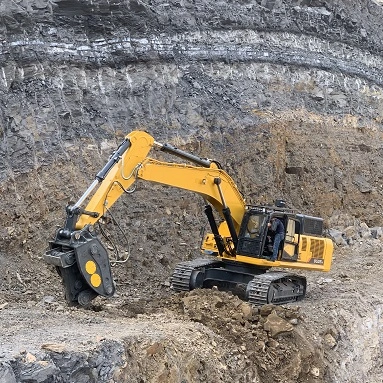
When a standard flail mower reaches its limit, SC Equipment's forestry attachments take over. Designed for heavy commercial land clearing, utility line maintenance, and professional forestry management, our tools turn your excavator into a land-clearing beast.Forestry Mulchers: Engineered with fixed carbide teeth to devour whole trees, dense undergrowth, and stumps.
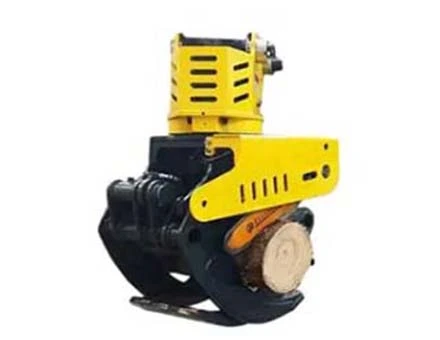
Tree Saws & Tree Shears: For surgical removal, processing, and handling of standing timber.
Log Grapples: High-tensile rotatable grapples for stacking and loading heavy logs.
Brush Cutters: Heavy-duty clearing for thick, unforgiving brush.
Demolition Attachments
For urban renewal and site tear-downs, we manufacture tools that bring concrete and steel to the ground safely and efficiently.Hydraulic Breakers
Pulverizers & Crushers
Vibro Rippers
Recycling & Scrap Attachments
Turn scrap metal into profit with our specialized recycling tools.Hydraulic Shears
Scrap Grapples
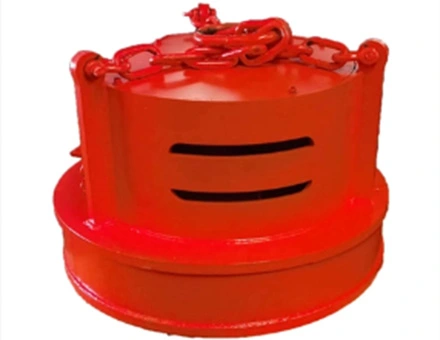
Heavy-Duty Excavator Magnets
Pile Driver Attachments
For foundation, marine, and retaining wall projects, our pile-driving technology delivers unmatched force.Excavator Pile Drivers
Vibro Hammers
Other Essential Excavator Attachments
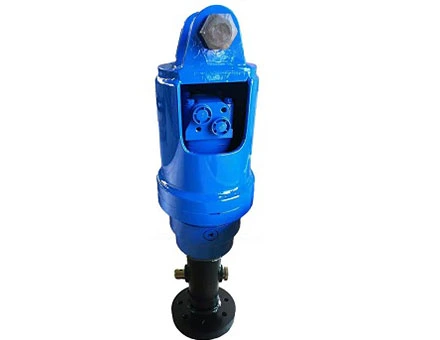
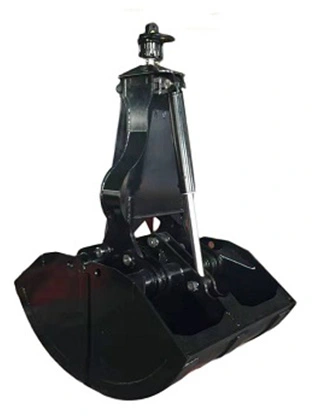
We complete your fleet with the everyday essentials:Buckets & Augers
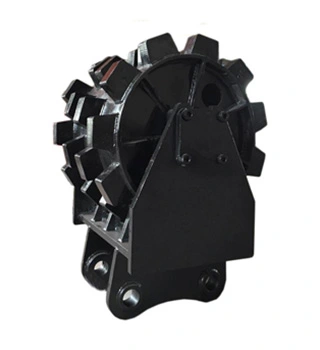
Compactors
Quick Couplers (for fast attachment swapping)
Why Global Buyers Work With SC Equipment
Choosing an attachment manufacturer is a major investment. Here is why the world's leading contractors partner with SC Equipment:| Advantage | Benefit to Your Business |
|---|---|
| 18+ Years Experience | Proven manufacturing expertise; we know what works in harsh environments. |
| CE Certified Products | Total compliance with strict international safety and quality standards. |
| OEM & ODM Support | Customized attachment solutions tailored to your specific fleet and local market. |
| Competitive Pricing | Factory-direct pricing ensures a vastly improved Return on Investment (ROI). |
| Fast Global Delivery | Streamlined logistics mean reduced machine downtime and faster deployment. |
| Professional Tech Support | Dedicated after-sales engineering support for faster project success. |