Tel:
Email:
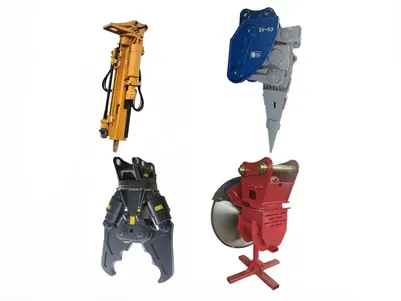
Facing hard rock, choosing the right tool means starting ahead of the game. The direct-impact breaker, the vibration-loosening ripper, and the static-expansion integrated machine—which one will be the "Rock King" for your site?
Don't worry. This in-depth selection guide for rock conditions will help you match precisely and hit the target.
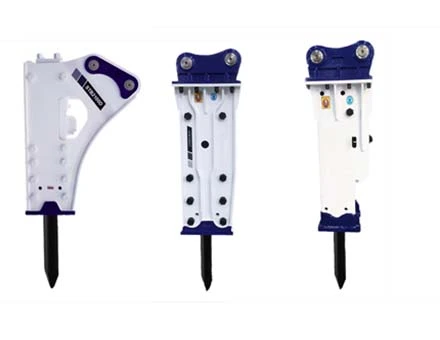
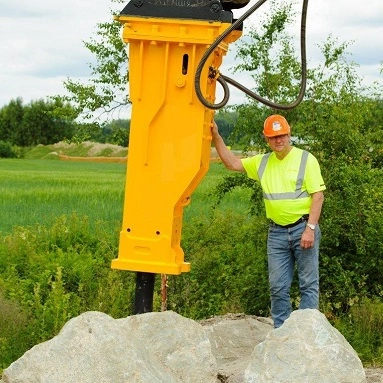
Ideal Rock Scenarios: Medium-hardness and below, fractured rock layers, weathered rock, secondary breaking of pre-split or jointed rock. It is commonly used for secondary breaking in quarries and rock handling during subgrade excavation.
Key Points & Limitations:
Advantages: High compatibility with excavators, great flexibility, fast breaking speed for non-massive rock.
Challenges: Facing high-hardness, intact granite or basalt, efficiency drops sharply, and wear on drill rods/breaker bodies increases dramatically.
Key Consideration: Evaluate the rock's Uniaxial Compressive Strength (UCS) and integrity. Best suited for rock layers typically with UCS below 100 MPa.
In a Nutshell: A cost-effective choice for medium-soft rock and secondary breaking, but not the efficient solution for extremely hard rock.

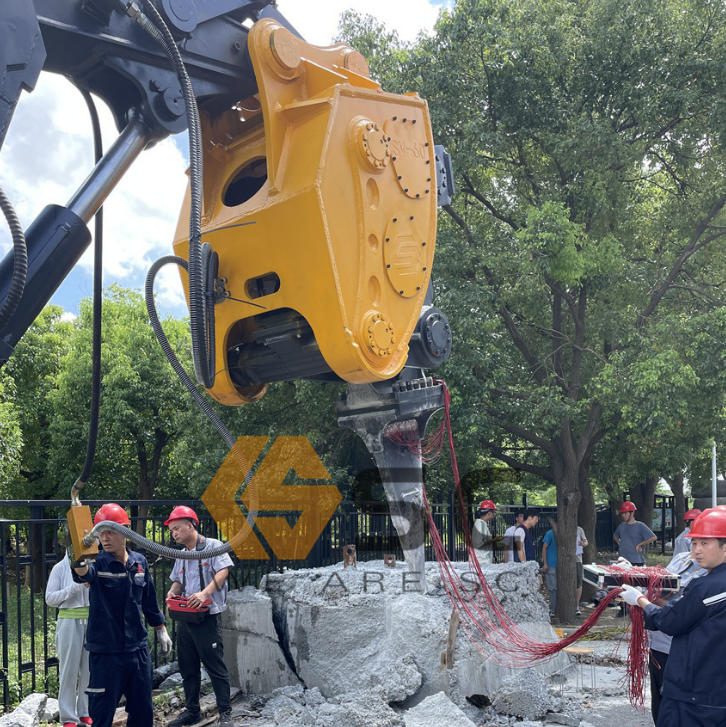
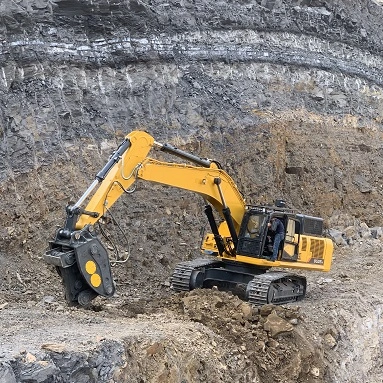
Ideal Rock Scenarios: Sedimentary rocks with apparent bedding or joints (e.g., limestone, shale), schist, heavily weathered rock layers. Excels at using the rock's natural planes of weakness to "prise it apart" rather than "shatter it."
Key Points & Limitations:
Advantages: High vibration frequency transmits energy into the rock mass, causing fatigue failure. More efficient than takeuchi hydraulic breakers for suitable rock and can produce larger, more usable blocks.
Challenges: Limited effectiveness against homogeneous, structureless, extremely hard igneous rock (like intact granite).
Key Consideration: Focus on whether the rock has developed bedding or joints. An efficient, low-waste tool for layered quarrying and specific geological conditions.
In a Nutshell: The "Artisan" for conquering layered and jointed rock, balancing efficiency and stone yield.
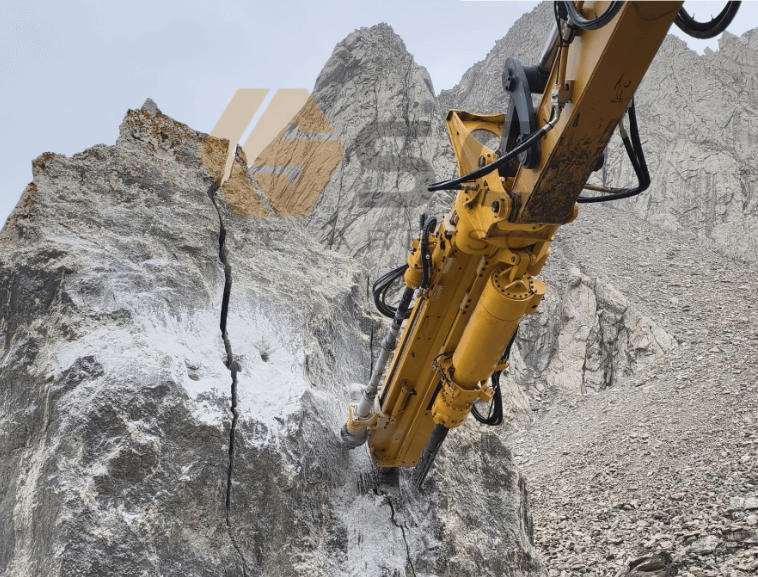
Ideal Rock Scenarios: High-hardness, intact granite, basalt, quartzite, etc., and urban areas, protected zones where blasting is prohibited, and projects with strict vibration/noise limits.
Key Points:
Core Technology: First drills holes, then inserts splitting heads to apply static hydraulic expansive force, safely and quietly cracking the rock from within.
Irreplaceability: In blasting-prohibited scenarios, it is the only mechanized solution for efficiently handling large, hard rock.
Output Quality: Produces neat rock faces and controllable block sizes, resulting in high material utilization.
In a Nutshell: The "ultimate weapon" for tackling extremely hard, massive rock and sensitive environments—safe, precise, and nuisance-free.
Rock Tool Selection Quick-Reference Chart
Tool | Core Breaking Principle | Ideal Rock Types | Main Limitations |
Hydraulic Breaker | High-frequency Impact Energy | Medium-soft rock, Weathered rock, Pre-split rock | Low efficiency on very hard rock, High wear |
Vibro Ripper | High-frequency Vibration causing internal fatigue | Rock with developed bedding/joints | Less effective on homogeneous, very hard rock |
Drilling & Splitting Machine | Static Hydraulic Expansive Force | High-hardness, massive rock (esp. in no-blast zones) | Requires pre-drilling, higher process coordination |
The Final Decision-Making Triangle:
1. Rock Diagnosis: Identify rock type, hardness (UCS), integrity, and geological structure (joints, bedding).
2. Site Condition Review: Confirm environmental restrictions (noise, vibration, blasting bans), project timeline, and required stone fragment specifications.
3. Overall Cost-Benefit Analysis: Calculate equipment investment, fuel consumption, wear part costs, labor, and overall productivity.
The choice impacts not just efficiency, but also project feasibility and profitability. Let the right tool empower your rock project with "rock-breaking force."
Struggling with seemingly impregnable rock? Contact SC equipment for a customized rock-breaking solution analysis and equipment recommendation based on your specific rock properties and site conditions!
 English
 Deutsch
 Español
 русский
 português
 العربية